Don’t Let Home Prices Headlines Fool You

Kim Deol • April 6, 2026

Spend about 5 minutes online searching for news about the housing market, and odds are you’ll see something pop up about home prices. You may even stumble onto social media influencers saying we’re headed for a crash. Let’s get you the context you need.

The truth is prices are going to vary depending on where you live. But they're not crashing.


The National Perspective: Moderate Price Growth

As a country, when you average it all together to get a true baseline, one thing becomes clear, home prices are still net positive at the national level.


According to the Redfin, national home prices were up about 1% year-over-year in February. So, what we’re seeing right now isn’t a collapse. It’s a market that’s normalizing after a period of unusually fast growth. And that impacts some local markets more than others – particularly those where prices rose too far, too fast during the pandemic.


A true crash, like what happened in 2008, would mean prices dropping sharply across the entire country. That’s just not what the data shows today. And it’s not where things are going either.

Experts Agree This Isn’t 2008

In fact, Fannie Mae surveyed over 100 housing market experts to ask their opinions on where prices are headed from here. And the experts agree, nationally, prices are expected to keep rising over the next five years:
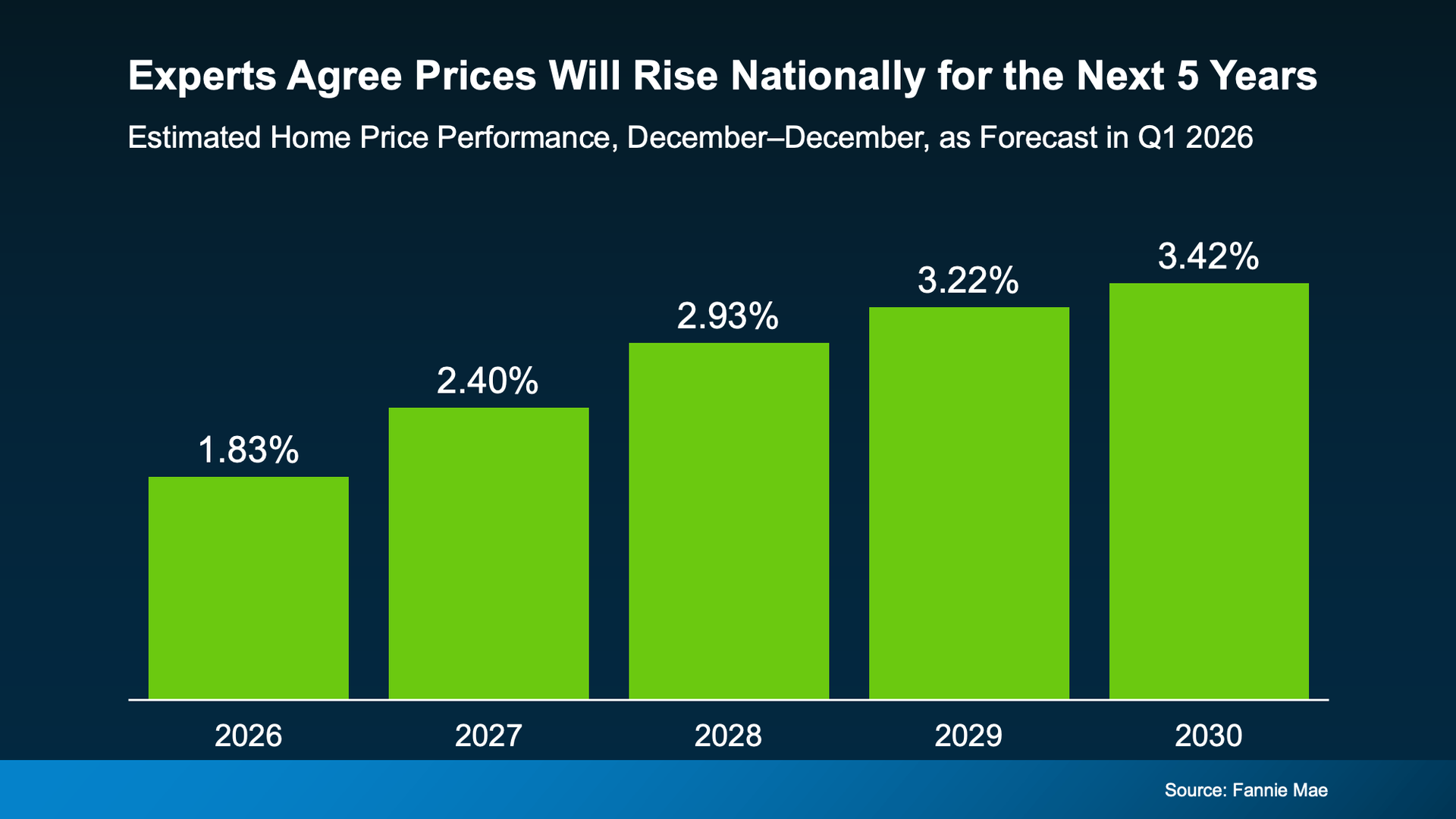
Bar chart showing forecasted annual national home price increases from 1.83% in 2026 to 3.42% in 2030 on a dark background.

That rise will be moderate, particularly this year, but the trend is clear. Nationally, prices are forecast to grow every year now through at least 2030 – and that’s normal. Daryl Fairweather, Chief Economist, at Redfin explains:


“House prices aren’t going to fall on a national scale any time soon—and that’s actually a good thing. It’s normal for house prices to rise gradually over time . . .”


That's why even in the select areas where prices have dropped slightly this year, the decline is expected to be temporary. According to that same quarterly Fannie Mae survey mentioned above, 85% of the experts say the markets that are seeing mild declines right now will return to positive price growth before the end of 2027.


The main takeaway? This isn’t a crash. And prices aren’t expected to fall nationally. If anything, the few areas experiencing declines are expected to rebound in the next year or so.

Bottom Line

It’s easy to get caught up in headlines that make it sound like something big is about to happen. But don’t be fooled. The housing market isn’t crashing. It’s just shifting.


The key is understanding what’s actually happening in your market, so you can make the right move for you. Let’s connect if you want the local perspective. Contact today me for a complimentary market analysis.


August 18, 2026
AI in Real Estate: The Future Is Here
August 13, 2026
Finding your dream home can feel overwhelming when demand is high, inventory is limited, and other buyers are ready to move quickly. But a competitive market doesn’t mean you have to settle. With the right strategy, preparation, and patience, you can improve your chances of finding and securing a home that fits your lifestyle and budget. 1. Know Exactly What You Want Before you start touring homes, define your priorities. Consider location, number of bedrooms, property size, commute, schools, neighborhood amenities, and must-have features. Separate your list into three categories: Must-haves: Features you cannot compromise on. Nice-to-haves: Features you would love but can live without. Deal-breakers: Issues that would make you walk away. Having clear priorities helps you make faster, more confident decisions when the right property appears. 2. Get Your Finances Ready In a competitive market, preparation can make your offer stand out. Speak with a lender early, understand how much you can comfortably afford, and obtain mortgage pre-approval if you plan to finance the purchase. Remember that your budget should account for more than the purchase price. Consider property taxes, insurance, maintenance, closing costs, and potential renovations. 3. Choose the Right Location A dream home isn't just about the house itself. The surrounding community can have a major impact on your daily life and the property's long-term value. Research neighborhoods based on factors such as: Commute times Schools and education options Local amenities Parks and recreation Future development Property values Neighborhood atmosphere If your preferred neighborhood is highly competitive, consider nearby areas that offer similar benefits at a potentially lower price. 4. Work With a Local Real Estate Professional An experienced real estate agent can give you valuable insight into local market conditions, recently sold properties, pricing trends, and upcoming listings. In a fast-moving market, having someone who can alert you to new opportunities and help you prepare a strong offer can make a significant difference. 5. Be Ready to Act Quickly Great properties can attract multiple offers within a short period. Once you find a home that meets your priorities, be prepared to make a decision. This doesn't mean rushing into a purchase. It means completing your financial preparation and knowing your limits before you begin shopping, so you can act confidently when the right opportunity comes along. 6. Make a Strong but Sensible Offer Price is important, but it isn't always the only factor sellers consider. A well-prepared offer with appropriate terms can make your proposal more attractive. Depending on your circumstances and local rules, factors such as financing strength, closing timeline, and contingencies may influence how competitive your offer is. Always avoid offering more than you can comfortably afford simply because you're competing with other buyers. 7. Don't Let Competition Push You Into the Wrong Home One of the biggest mistakes buyers can make is becoming emotionally attached to winning rather than finding the right property. If a home exceeds your budget or has significant problems that you're not prepared to handle, walking away may be the smartest decision. There will be other opportunities. The goal isn't simply to buy a house. It's to find a home that works for your finances, lifestyle, and future plans. 8. Stay Patient and Flexible Finding a dream home may take time. You may lose out on a property you loved, but that doesn't necessarily mean you've missed your opportunity. Stay open to adjusting less important preferences, exploring nearby neighborhoods, or considering different property types. Flexibility can significantly expand your options without requiring you to compromise on what matters most.  Final Thoughts Buying a home in a competitive market requires preparation, realistic expectations, and a clear strategy. Know your budget, understand your priorities, research the market, and be ready to act when the right opportunity appears. Most importantly, don't let market competition pressure you into making a decision you'll regret. Your dream home is worth searching for—but the best purchase is one that feels right both emotionally and financially.
New suburban townhomes with gray siding and a landscaped street frontage
August 6, 2026
Current listing data shows, for example, a 2,411-SF Parkton around $1.599M, 2,470-SF Marigold starting around $1.725M, 2,605-SF Primrose around $2.065M, and 4,398-SF Orchid starting around $2.86M. ( Zillow )