Should You Wait for Lower Rates? Answers for Anyone Planning a 2027 Move.
When the family gathers around the table, the big housing headlines usually come up first. Are prices going to crash? What about a recession? (The data doesn’t point to either one.)
But by the time dessert comes out, the conversation tends to get more personal. That’s when people start talking about their own plans – whether to wait for lower rates and whether buying or selling actually makes sense right now.
Those are the questions that might shape your, your friends’, and family’s plans for 2027. So, let’s dig into each one.
“Should I Wait for Mortgage Rates To Come Down?”
Experts don’t see rates dropping much through 2027. Forecasts from Fannie Mae, the Mortgage Bankers Association (MBA), and Wells Fargo all have rates landing between about 6.9% and 7.2% by the end of next year.
So, if you’re waiting for a big drop, you could be waiting a while.
And a smaller dip may not save as much as you’d think. On a $400,000 loan, going from 7.25% to 7% lowers the monthly principal and interest payment by only about $68 (see chart below):
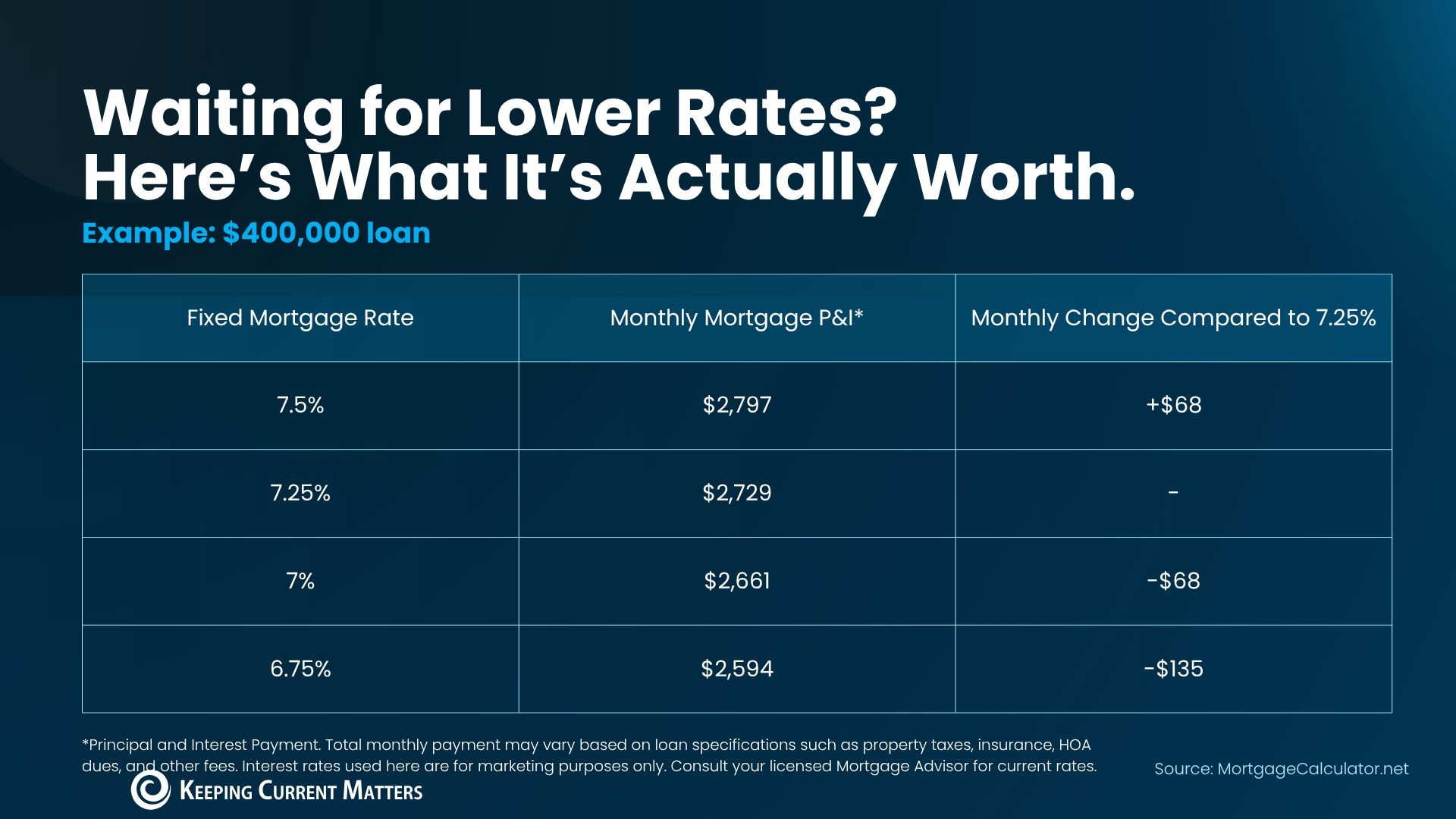
Odds are, that’s not as much as you expected.
The bigger opportunity is the leverage buyers have right now. Realtor.com estimates the recent rise in rates cost a buyer with a $2,000 monthly budget more than $22,000 in purchasing power. But the typical price cut on a median-priced home is about $18,000, according to HousingWire Data.
In other words, a typical price cut today can win back most of the buying power higher rates took away. That’s why the deal you can negotiate now may matter more than waiting for rates to come down.
“Does Buying a Home Make Sense Right Now?”
Another lingering question, what’s going to happen to home prices going forward? Every situation is different. But if you’re ready and the numbers work for you, forecasts show buying can pay off over time.
Based on the projections of over 100 experts and economists compiled by Fannie Mae, home prices will continue to rise nationally through at least 2031. That means a $400,000 home should gain over $58,000 in value over the next 5 years (see graph below):
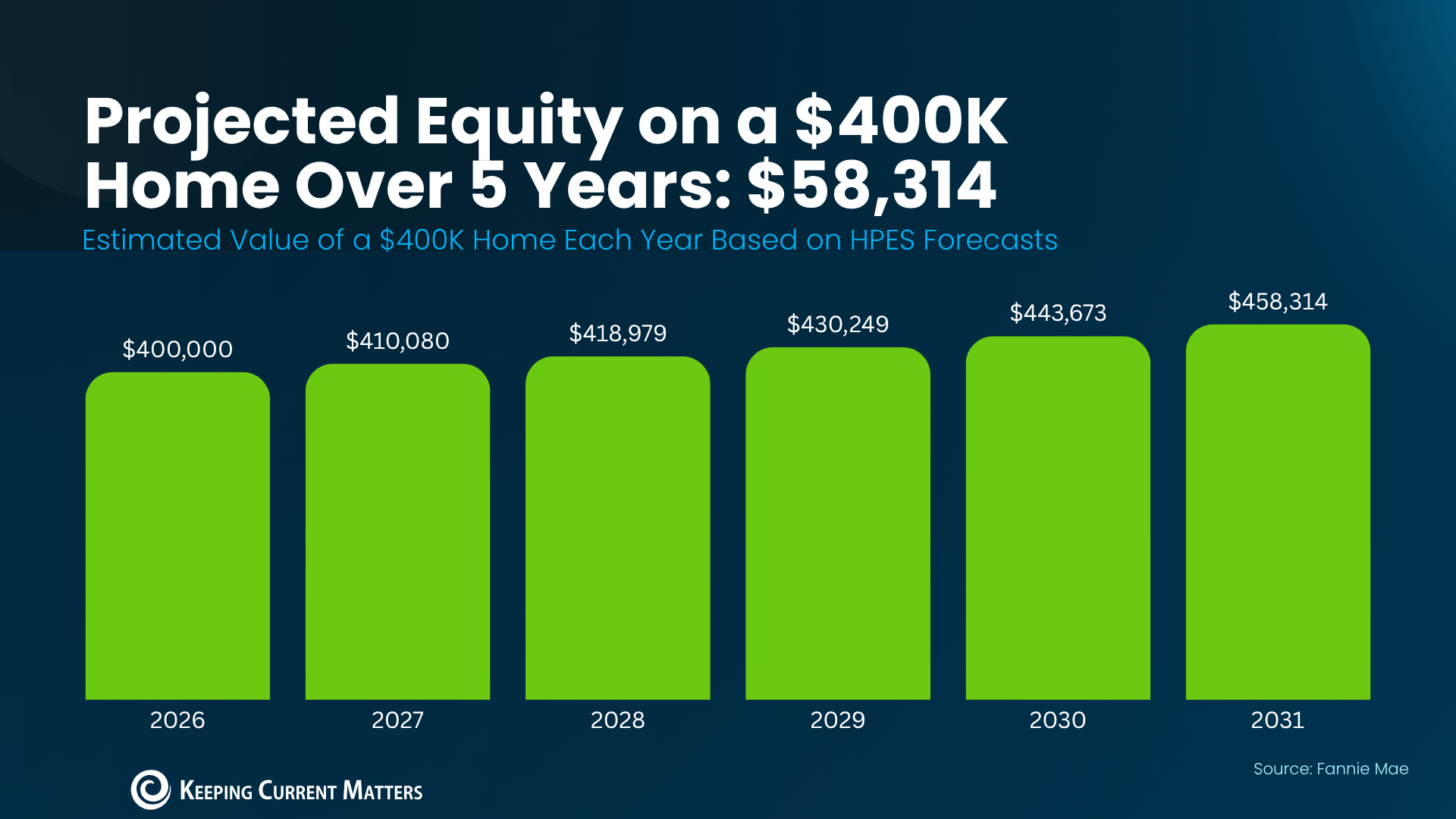
That’s wealth you build just by owning your home, paying down your mortgage, and if prices rise in your area. That’s a far cry from experts saying there’s going to be a crash.
And since buyers today have more homes to choose from than they’ve had in recent years, you should be able to find a home that fits your budget so you can buy now and start building that long-term wealth through the years. But since price trends vary by local market, before you start looking, talk to an agent about what’s happening where you are.
“Is Now a Bad Time To Sell?”
While you may be hearing that more sellers are doing price cuts or making concessions, here’s some perspective you’ll want to consider. That doesn’t mean you have to make some big compromise to get your house sold or that it’s a bad time to sell.
If you price and prep your house right, you can likely still sell fast and for a good profit. Sure, your buyer may ask for a concession, but that’s all up for negotiation – and you likely have plenty of equity to sell and come out ahead.
And don’t forget it goes both ways. Most sellers are also buyers – odds are you are too. 78% of homebuyers are repeat buyers, according to the National Association of Realtors (NAR) (see graph below). So, when you go to buy your next place, you can negotiate with that seller on terms, too.
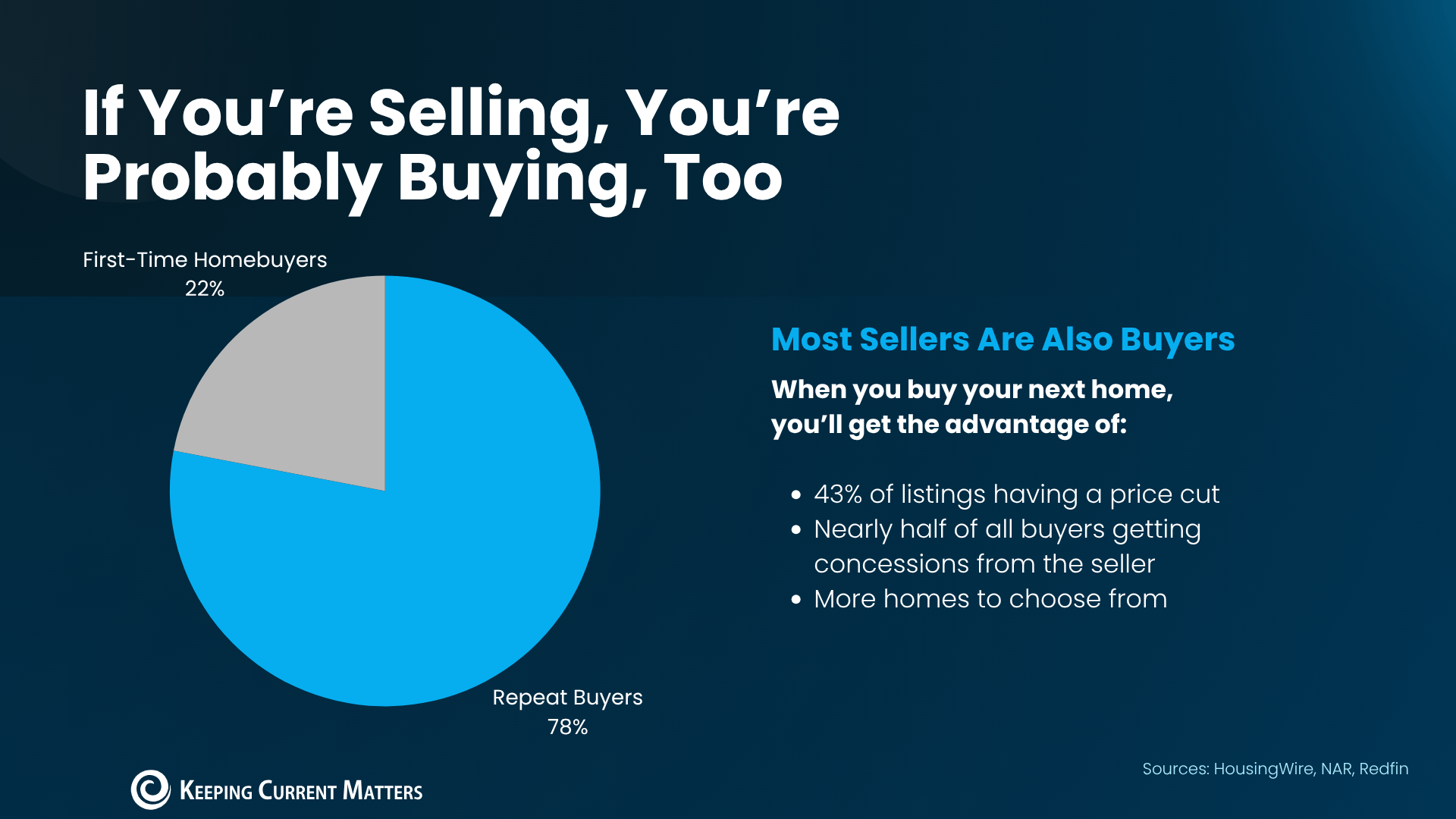
Because if you have to be a little flexible on your sale, the sellers you buy your next house from will likely have to be flexible, too.
Right now, 43% of listings have a price cut, according to HousingWire Data. And Redfin reports nearly half of buyers are getting concessions from sellers, like help with closing costs. Those are things that will work to your benefit when it’s time to buy.